Treatments

Orthofacial Surgery

Facial harmony and functionality through surgical precision.

Orthofacial Surgery

What is Orthofacial Surgery?

Also known as orthognathic surgery, it is a specialized procedure within maxillofacial surgery aimed at correcting skeletal jaw abnormalities that cannot be treated with orthodontics alone. It is indicated for patients with severe maxillomandibular discrepancies affecting occlusion, chewing function, facial aesthetics, or respiratory health.

This type of intervention involves the surgical repositioning of the upper jaw (Le Fort I osteotomy), the lower jaw (bilateral sagittal split ramus osteotomy), and, in some cases, the chin (genioplasty), in order to achieve a harmonious relationship between the facial skeleton, soft tissues, and dental occlusion.

Our Goals

Function

Restoring chewing ability and correcting malocclusions (Class II, Class III, asymmetries).

Aesthetics

Improving facial symmetry and profile.

Health

Optimizing the airway (key in sleep apnea) and joint health.

Joint and Speech Health

By correcting occlusal imbalances, joint overloading is reduced, and proper speech pronunciation is facilitated.


3D Digital Planning

Our success lies in an interdisciplinary approach. Treatment consists of three phases:

Presurgical orthodontics

Aligns and decompensates the arches.

Surgery

Three-dimensional repositioning using controlled techniques under general anesthesia.

Postsurgical orthodontic

Fine adjustments and final occlusal finishing.

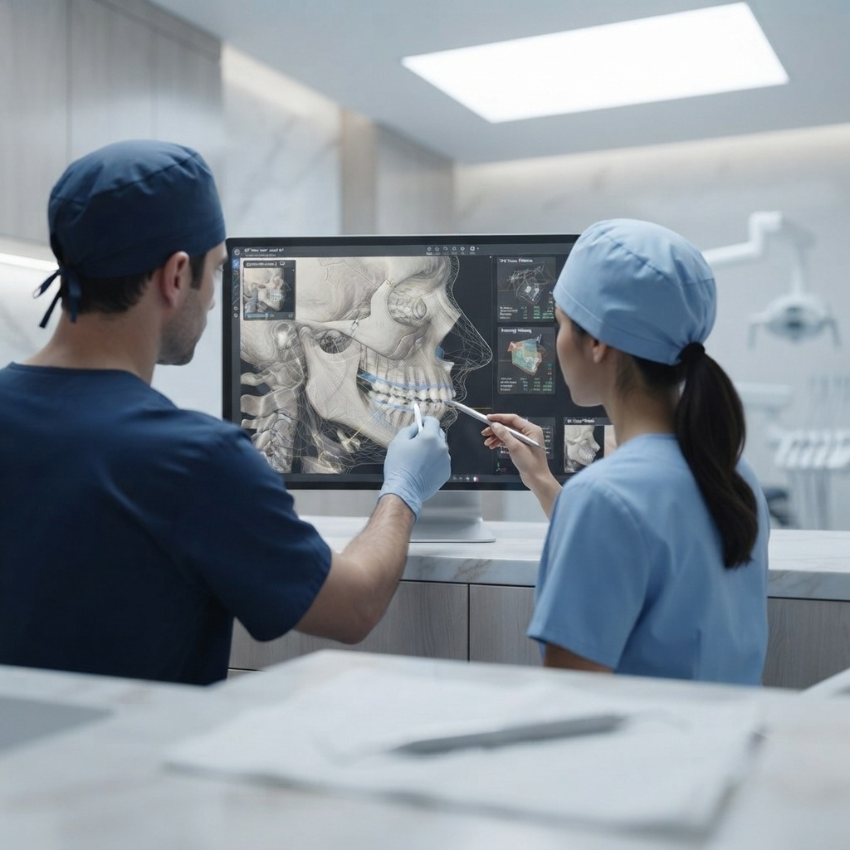
Currently, planning is carried out using advanced 3D digital technology. By using virtual surgery software, intraoral scanners, and computed tomography (CBCT), we can simulate precise results prior to surgery. This not only enhances surgical accuracy but also optimizes ongoing communication with the patient at every step of the process.

A Comprehensive Transformation

This procedure combines functionality and aesthetics with long-lasting results. Patients experience a significant improvement in their quality of life thanks to:

Definitive correction

Permanent resolution of complex malocclusions.

Facial harmonization

Complete improvement of facial profile and symmetry, with a highly positive impact on patient self-esteem.

Long-term stability

Durable results, especially when combined with well-planned orthodontics.

High predictability

Thanks to the use of digital technology and custom surgical guides, we ensure safe procedures and predictable outcomes.

Its interdisciplinary approach and integration of the latest technology allow us to offer this essential tool for the comprehensive rehabilitation of patients with dentofacial skeletal abnormalities.

The Orthodontist's Role in Orthofacial Surgery

The orthodontist plays an essential role in treating patients who require orthofacial surgery (also called orthognathic surgery). Their work consists of planning and coordinating treatment alongside the maxillofacial surgeon to achieve proper chewing function, a stable occlusion, and balanced facial harmony.

01

Evaluation and Diagnosis

The orthodontist conducts a comprehensive assessment of the patient to determine whether the malocclusion can be corrected through orthodontics alone or if it requires combined surgical treatment.


  • Takes medical history and performs clinical examination.
  • Evaluates jaw relationships and occlusion.
  • Analyzes facial aesthetics and profile.
  • Requests diagnostic studies such as X-rays, clinical photographs, study models, and, when necessary, cone-beam computed tomography (CBCT).

02

Treatment Planning

Works in close coordination with the maxillofacial surgeon to:

  • Establish the definitive diagnosis.
  • Define functional and aesthetic goals.
  • Plan surgical jaw movements.
  • Determine treatment sequencing and the appropriate timing for surgery.

03

Presurgical Orthodontics

This is one of the most important phases of treatment. Its goals are to:

  • Align and level the teeth.
  • Eliminate dental compensations caused by the skeletal malocclusion.
  • Coordinate dental arches.
  • Place teeth in an ideal position so that, after surgery, they articulate properly.

During this phase, it is common for the bite to appear worse, as compensations masking the underlying jaw discrepancy are removed.

04

Surgical Preparation

Before surgery, the orthodontist:

  • Verifies that presurgical goals have been achieved.
  • Places rigid archwires and necessary attachments to facilitate intermaxillary fixation during surgery.
  • Coordinates the procedure date with the surgeon and reviews final treatment planning.

05

Retention Phase and Follow-Up

Once treatment is complete, the orthodontist:

  • Places retainers to maintain achieved results.
  • Monitors occlusal stability.
  • Watches for potential dental or skeletal relapse.
  • Coordinates long-term follow-up with the maxillofacial surgeon when necessary.

06

Interdisciplinary Teamwork

The success of orthofacial surgery relies on collaboration among various specialists:

  • Orthodontist
  • Oral and maxillofacial surgeon
  • Periodontist (when periodontal disease is present)
  • Prosthodontist or restorative dentist (in cases with tooth loss)
  • Speech therapist or logopedist (when functional speech or swallowing issues exist)

FAQ´S

Frequently Asked Questions About Orthofacial Surgery

When is this surgery indicated?

When skeletal jaw discrepancies are so severe that conventional orthodontics alone cannot correct them.

Is it a very painful process?

Postoperative care is required, but thanks to modern techniques and pain management, it is manageable with a controlled recovery.

How long does the entire treatment take?

It includes presurgical orthodontics, the surgery itself, and a postsurgical orthodontic phase; total duration varies by case as part of an interdisciplinary process.

How does it improve sleep apnea?

Maxillomandibular advancement increases the volume of the upper airway, facilitating smoother breathing and reducing apnea episodes.

Does digital planning guarantee the result?

Yes, it enables high-precision simulation of bone and facial changes, significantly enhancing the predictability of the final outcome.